Skip to content

Free delivery across India

Gut Wellness Club
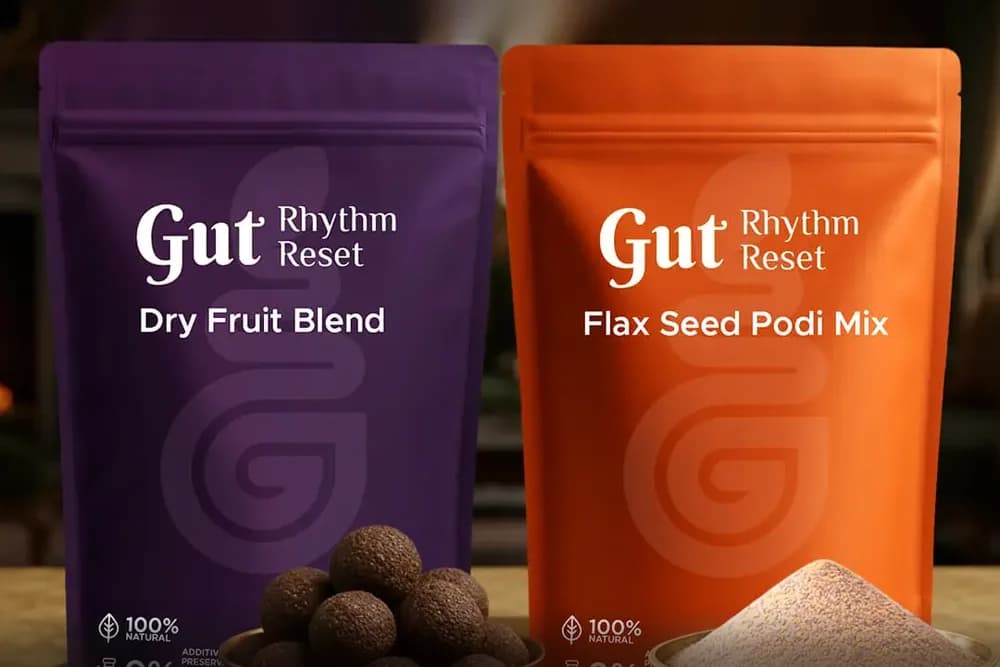
Dry Fruit Blend and Flax Seed Podi pouches
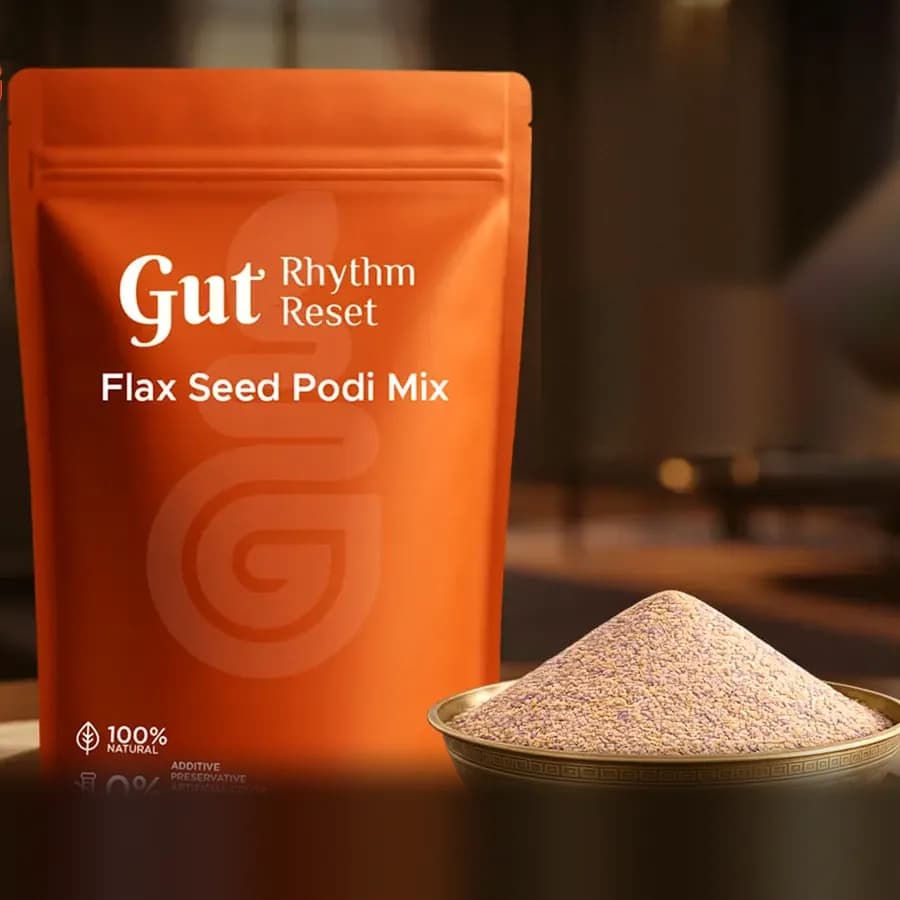
A woman in a navy saree with a bowl of warm Flax Seed Podi, the pouch on the table
A smiling woman holding a Flax Seed Podi pouch with a thumbs up
Flax seed

India's Cleanest Dry Fruit + Flax Seed Combo

Dry Fruit Blend + Flax Seed Podi

₹3,999₹4,998Save ₹999 · 20%

Inclusive of all taxes. Free delivery.

Chewy fruit-and-berry balls plus a warm flax seed kheer: two whole-food classics from figs, prunes, raisins, berries and seeds. Nothing else. 60-day pack.

  • 60-day pack
  • 1 kg
  • 100% vegetarian
  • No additives or preservatives
1

Prepared fresh and dispatched within 2 working days.

Made with · 11 ingredients

  • Figs
  • Berries
  • Prunes
  • Raisins
  • Himalayan pink salt
  • Flax seeds
  • Sunflower seeds
  • Carom seeds (ajwain)
  • Ginger
  • Jaggery
  • Kokum

In this combination

Each pouch also has its own page.
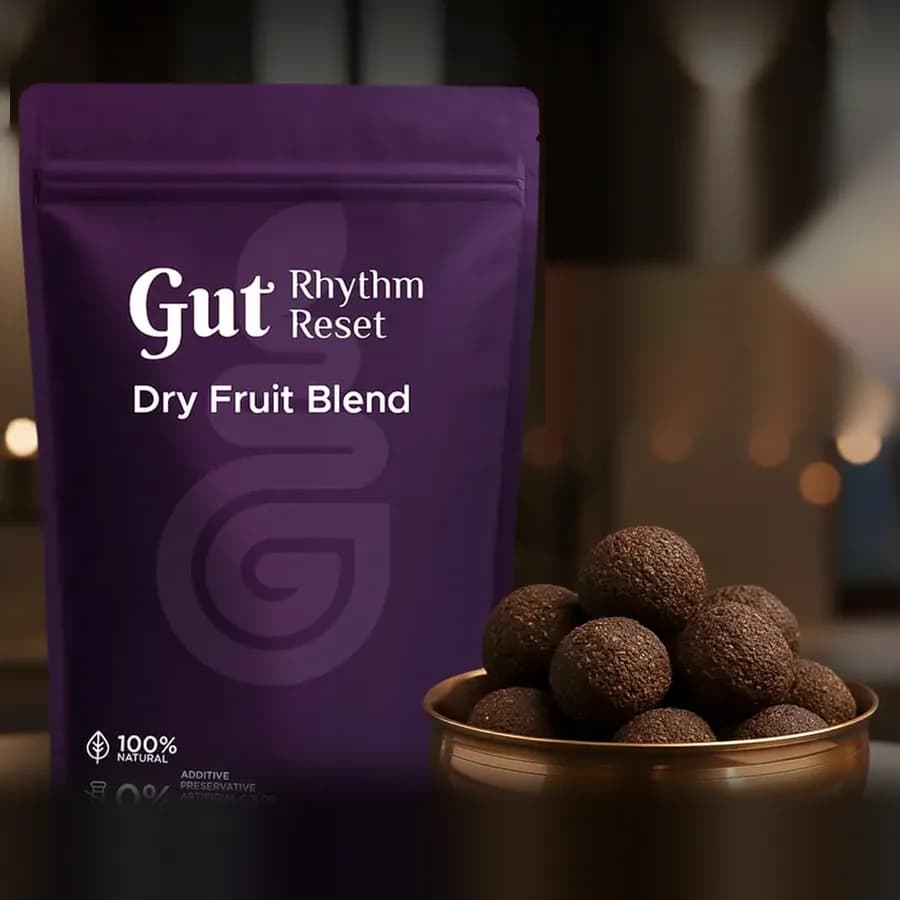
You save ₹999 against buying the two pouches separately.

A woman in a navy saree with a bowl of warm Flax Seed Podi, the pouch on the table
A smiling woman holding a Flax Seed Podi pouch with a thumbs up

A part of your day

Evening, bedtime, dessert

  1. 1
    Dry Fruit Blend

    Chew one ball well in the evening and one before bed.

  2. 2
    Flax Seed Podi

    Boil 1 tbsp (15 g) powder in 100 ml water for 5–7 minutes until it turns kheer-like. Cool slightly and enjoy it as a dessert after dinner.

Clean, by design

India's cleanest means a short ingredient list we are proud to print, and proof you can ask for.

  • Whole ingredients only

    Real fruits, seeds and spices. No extracts, fillers or flavourings.

  • Nothing added

    No preservatives, artificial colours or flavours, or anti-caking agents.

  • Independently lab tested

    Tested by an independent laboratory. Reports are available on request.

    Ask us for the lab report

  • FSSAI-licensed kitchen

    Made fresh in small batches in a licensed kitchen.

  • Known suppliers

    We know where every ingredient comes from.

What's inside, and what research says

A short, honest look at each ingredient. These are findings about the ingredients themselves, from published research. They are not claims about this product.
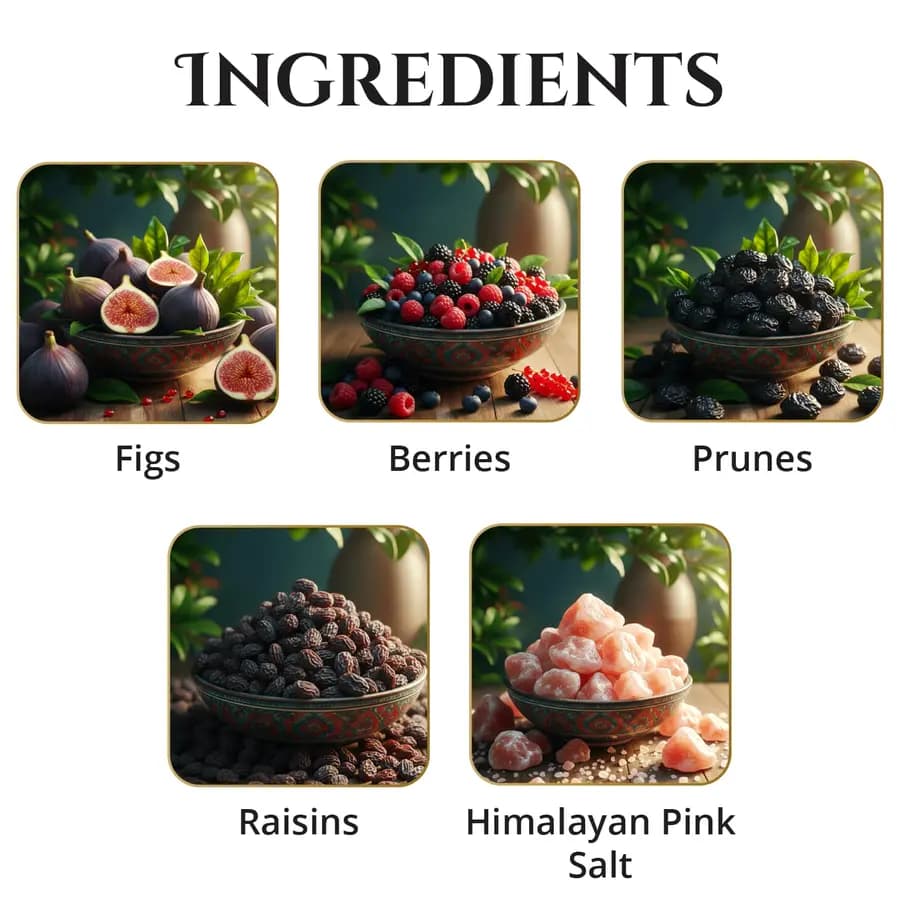
Illustrated ingredients of India's Cleanest Dry Fruit + Flax Seed Combo
FigsFicus caricaDried figs (anjeer) are sun-dried fruits of the fig tree, eaten as they are, soaked, or chopped into sweets, ladoos, kheer and snack mixes in Indian food.

What it contains

  • Two sun-dried Moroccan fig varieties contained roughly 580-760 mg potassium, 120-160 mg calcium and 50-100 mg magnesium per 100 g, plus about 305-380 mg gallic-acid-equivalent polyphenols per 100 g dry weight.

    Source: Scientific Reports 2025

  • In a laboratory comparison of dried fruits, figs and dried plums scored best for overall nutrient density, and the authors describe dried fruits as dense in phenol antioxidants and dietary fibre.

    Source: Journal of the American College of Nutrition 2005

What research says

  • Human trialIn a small study of 10 healthy adults, eating 40 g of figs was followed by higher blood plasma antioxidant capacity for about 4 hours. Single-meal, preliminary.

    Source: Journal of the American College of Nutrition 2005

  • Laboratory studyIn a laboratory fermentation model with human faecal samples, fibres extracted from figs shifted some gut bacteria and acid by-products. Not tested in people; preliminary.

    Source: Food Chemistry: X 2026

Mixed dried berriesVaccinium macrocarpon (cranberry); Vaccinium corymbosum (blueberry)Dried cranberries and dried blueberries are tart-sweet fruits, mostly infused with sugar or fruit juice before drying, added to snack balls, muesli and sweets.

What it contains

  • Five commercial sweetened dried cranberry products contained about 2.6-5.9 mg total phenolics and 0.3-1.0 mg proanthocyanidins per g, lower in proanthocyanidins than raw cranberries (3.6 mg/g), and levels fell over 12 months of storage.

    Source: Foods 2020

  • In a laboratory study, cabinet-drying blueberries cut total anthocyanins by about 41-49% (from 7.2 to 3.7-4.3 mg/g dry matter), yet antioxidant activity of the extracts did not differ significantly from fresh or frozen berries.

    Source: Journal of Biomedicine and Biotechnology 2004

What research says

  • Human reviewA systematic review of 3 human trials of other berries (aronia, strawberry, raspberry, cloudberry, bilberry) found no significant effect on gut microbiota over 8-12 weeks; more trials are needed.

    Source: Nutrients 2022

PrunesPrunus domesticaPrunes are dried plums, eaten whole, soaked or chopped as a sweet, tangy dried fruit and used in desserts, chutneys and snack mixes.

What it contains

What research says

  • Human trialIn a 12-month randomised trial of 143 women aged 55-75, eating 50 or 100 g of prunes daily was linked to differences in gut bacterial make-up, including more Lachnospiraceae. Relevance is unclear.

    Source: Food & Function 2022

  • Human trialIn a 4-week trial of 120 healthy adults eating 80 or 120 g of prunes daily, most gut bacteria measured were unchanged; Bifidobacteria rose slightly.

    Source: Clinical Nutrition 2019

RaisinsVitis vinifera (dried grapes)Raisins (kishmish) are dried grapes, widely used whole in Indian sweets, kheer, pulao, ladoos and snack mixes.

What it contains

  • A review describes raisins as dried grapes that are about 60% sugar and also contain dietary fibre and phenolic compounds.

    Source: Nutrients 2019

  • Analysis of five Turkish sun-dried raisin types identified 27 phenolic compounds (flavan-3-ols, phenolic acids, flavonols, anthocyanins); total phenolic and anthocyanin content varied widely between types.

    Source: Journal of the Science of Food and Agriculture 2013

What research says

  • Human trialIn a small 14-day study of 13 healthy adults eating about 85 g of raisins daily, overall gut microbial diversity did not change, though some bacterial groups rose and others fell.

    Source: Nutrition Journal 2019

  • Laboratory studyIn a laboratory model of the human gut, sun-dried raisins increased counts of bifidobacteria and lactobacilli. Not tested in people; preliminary.

    Source: Food & Function 2016

  • Laboratory studyIn laboratory assays on five raisin types, antioxidant capacity correlated strongly with phenolic content. A chemical measurement, not proof of an effect in the body.

    Source: Journal of the Science of Food and Agriculture 2013

Himalayan pink saltNot a plant: halite (sodium chloride) rock mined in the Salt Range, PakistanHimalayan pink salt is mined rock salt, used as an unrefined alternative to table salt for seasoning; sendha namak is also used in Indian fasting foods.

What it contains

Flax seedsLinum usitatissimumSmall brown or golden seeds eaten roasted, ground into chutneys and laddoos, or added to rotis and snacks in Indian cooking.

What it contains

  • A review reports flaxseed contains 35 to 45% oil, mostly alpha-linolenic acid (an omega-3 fatty acid), 20 to 30% protein, and up to about 28% dietary fibre including mucilage; data vary widely between sources.

    Source: Voprosy pitaniia 2012

  • Flaxseed is described as the richest known source of the lignan secoisolariciresinol diglucoside (SDG), and contains small amounts of other lignans such as pinoresinol, lariciresinol and matairesinol.

    Source: Frontiers in Genetics 2018

What research says

  • Human trialIn a 6-week trial, 252 healthy postmenopausal women ate about 10 g ground flaxseed daily; certain gut bacteria were linked to making enterolactone, a gut-bacteria metabolite of flax lignans.

    Source: Nutrients 2021

  • Human trialIn a crossover trial of 42 healthy adults taking a flax lignan extract (50 mg SDG daily, 60 days), urinary enterolactone was associated with faecal microbiome composition.

    Source: American Journal of Clinical Nutrition 2019

  • Laboratory studyLaboratory studies summarised in a review found that SDG and its metabolites can scavenge free radicals, including hydroxyl radicals. Test-tube data only.

    Source: Frontiers in Genetics 2018

Sunflower seedsHelianthus annuusKernels of the sunflower, eaten raw or roasted as a snack and added to chikki, granola, salads and baked foods.

What it contains

  • A 2017 review reports sunflower seeds contain about 20% protein and 35 to 42% oil rich in linoleic acid, plus fibre, vitamin E, selenium, copper, zinc, folate and iron.

    Source: Chemistry Central Journal 2017

  • One analysis of seeds, cold-pressed oil and press-cake reported 18 mineral elements, with the oil mainly linoleic (about 64%) and oleic (about 20%) acid.

    Source: Plants 2021

What research says

  • Nutrient dataA review reports that sunflower seeds contain tocopherols (vitamin E forms, mostly alpha-tocopherol, about 92% in one study of commercial hybrids) that act as antioxidants in laboratory and living systems.

    Source: Chemistry Central Journal 2017

  • Laboratory studyLaboratory work summarised in the same review identified phenolic acids (mainly caffeoylquinic/chlorogenic acid) and flavonoids in the seed, and seed extracts have been tested in antioxidant assays (FRAP, DPPH, ORAC).

    Source: Chemistry Central Journal 2017

Carom seeds (ajwain)Trachyspermum ammiCarom seeds (ajwain) are small, sharply aromatic seeds tempered in oil or added to doughs, parathas, snacks and lentil dishes in Indian cooking.

What it contains

What research says

  • Laboratory studyLaboratory assays (DPPH, FRAP, total antioxidant capacity) measured antioxidant activity of carom seed extracts and oils from 14 Iranian populations; activity differed between populations. Test-tube study only.

    Source: Scientific Reports 2022

  • Laboratory studyIn a laboratory study, thymol content of ajowan oil ranged from about 38% to 89% depending on water stress during growth, so composition is not constant.

    Source: Foods 2022

Research on this ingredient is still early: laboratory and animal studies only.

GingerZingiber officinaleGinger (adrak) is the fresh or dried rhizome (sonth when dried), used grated, sliced or powdered in curries, chai, pastes, chutneys and pickles across Indian cooking.

What it contains

  • Gingerols are the main pungent compounds in fresh ginger rhizome; on heating or drying they convert into shogaols, which give dried ginger its sharper pungency.

    Source: Phytochemistry 2015

  • A 2022 review found gentler drying and extraction (e.g. freeze-drying) gave extracts richer in gingerols and phenolics, while hot processes favoured shogaols.

    Source: Food Research International 2022

What research says

  • Human trialIn a randomized double-blind study of 24 healthy volunteers, 1,200 mg of ginger capsules shortened gastric half-emptying time (13.1 vs 26.7 min on placebo) and increased antral contractions. Small, single-dose study.

    Source: European Journal of Gastroenterology & Hepatology 2008

  • Human trialA smaller crossover trial in 16 healthy volunteers found that 1 g of powdered ginger did not change gastric emptying, so results across human studies are mixed.

    Source: Anaesthesia 1993

  • Animal studyIn rats fed ginger (50 mg per 100 g diet) for 8 weeks, pancreatic lipase, amylase, trypsin and chymotrypsin activities were higher. Animal study only.

    Source: Die Nahrung 2000

JaggerySaccharum officinarum (sugarcane); made by boiling down cane juiceJaggery (gur) is unrefined cane sugar made by boiling sugarcane juice until it sets; it is the traditional Indian sweetener for ladoos, chikki, tea and sweets.

What it contains

  • Jaggery is mostly sugar: a review reports about 70-85 g sucrose and 7-10 g glucose and fructose per 100 g, with composition varying by cane, region and processing.

    Source: Sugar Tech 2022

  • Unrefined cane sugars from Japan, Malaysia and Indonesia contained about 230-1,350 mg total minerals per 100 g, roughly 69% of it potassium, followed by calcium and magnesium.

    Source: Foods 2023

What research says

  • Laboratory studyLaboratory tests on seven commercial sugars found unrefined (non-centrifugal) sugars had more antioxidant activity and higher phenolic and mineral content than refined ones. Not a human study.

    Source: Food Research International 2018

Research on this ingredient is still early: laboratory and animal studies only.

KokumGarcinia indicaA tart, deep-purple fruit whose dried rind is used in Konkan, Goan and Gujarati cooking to sour curries and to make the cooling drink kokum sherbet.

What it contains

  • Kokum rind is a source of hydroxycitric acid, garcinol (a yellow benzophenone pigment) and two anthocyanins, cyanidin-3-sambubioside and cyanidin-3-glucoside, per a 2021 review.

    Source: Pharmaceuticals (Basel) 2021

What research says

  • Laboratory studyIn a laboratory study, garcinol purified from kokum rind scavenged free radicals in the DPPH assay at about three times the strength of vitamin E by weight.

    Source: Journal of Agricultural and Food Chemistry 2000

  • Animal studyIn rodent studies summarised in a 2021 review, kokum extracts raised antioxidant enzyme levels such as glutathione, SOD and catalase. The review lists no human studies.

    Source: Pharmaceuticals (Basel) 2021

Research on this ingredient is still early: laboratory and animal studies only.

General information about the ingredients, not about this product. Our products are food, not medicine, and are not intended to diagnose, treat, cure or prevent any disease. These statements have not been evaluated by FSSAI.

Common questions

What does “India's Cleanest” mean?

It means the shortest honest ingredient list we can make: whole ingredients only, with no additives, preservatives, artificial colours or flavours, and every product independently lab tested. The full list is printed on the pack and on each product page, with the reference for what is known about every ingredient.

Are your products lab tested?

Yes. Our products are tested by an independent laboratory, and the lab report is available on request. Write to us with the product name and we will send it.

Are they FSSAI approved?

Our blends are made from whole food ingredients in an FSSAI-licensed kitchen. They suit most adults as part of a normal diet. If you are pregnant, nursing, have a medical condition or take regular medication, please check with your doctor first.

How do I use them?

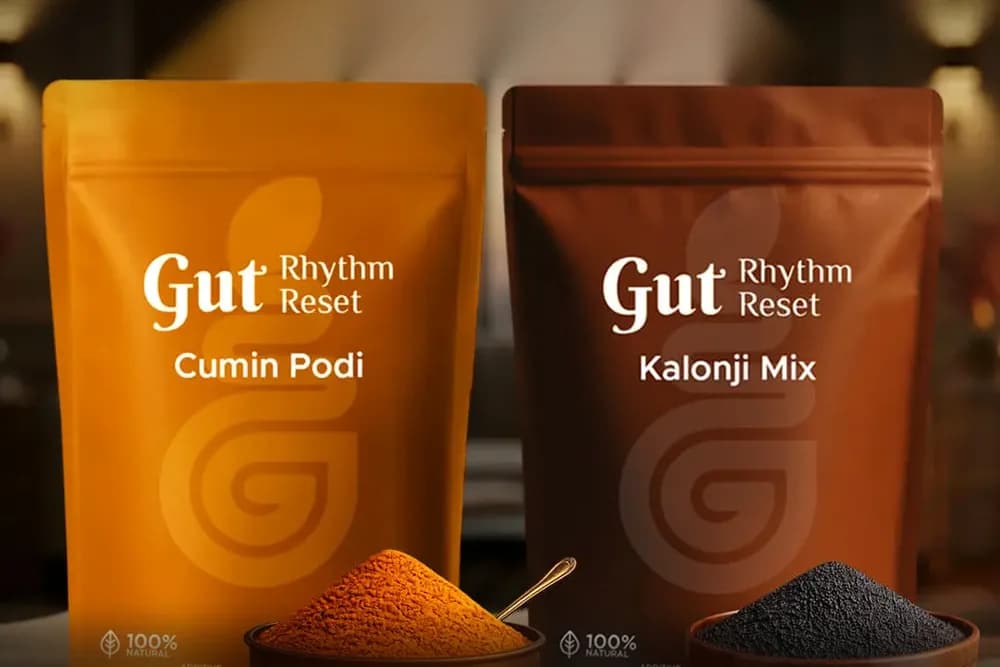
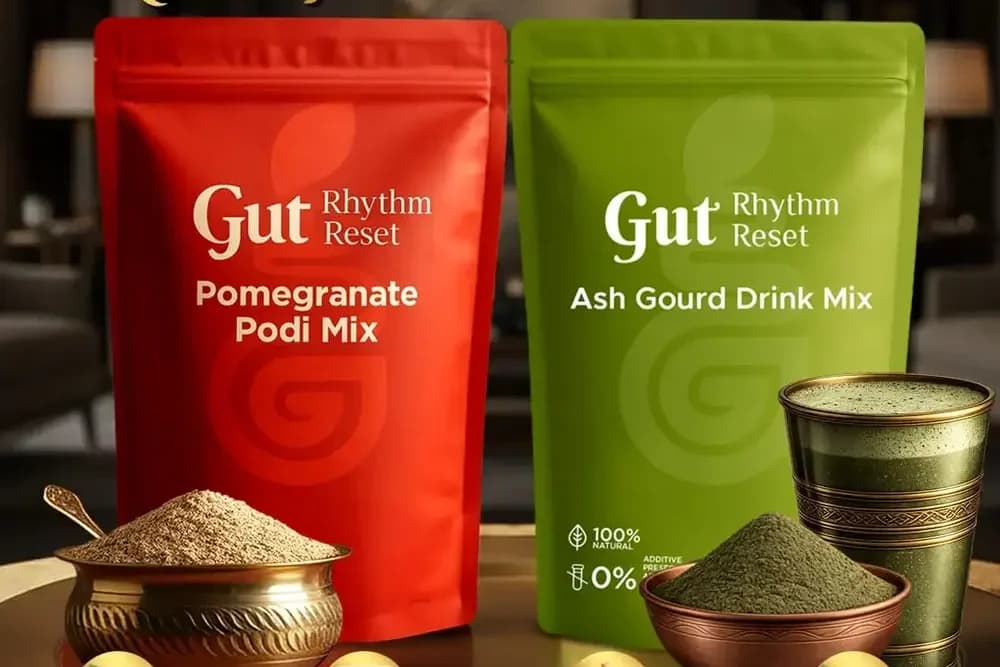
Podis are chewed by the spoonful, usually after meals. Drink mixes are stirred into a glass of water. The Kalonji Mix is sprinkled on food or stirred into buttermilk, and the Flax Seed Podi is simmered into a warm, kheer-like dessert. Each product page has the steps.

All questions
About this blend

This combo pairs India's Cleanest Dry Fruit Blend (figs, berries, prunes, raisins and pink salt) with India's Cleanest Flax Seed Podi (flax, sunflower seeds, carom, ginger, jaggery and kokum).

Enjoy a dry fruit ball in the evening and one before bed, and the flax seed kheer as a dessert after dinner. Both are made fresh, free of additives and independently lab tested.

Buying the combo is ₹999 less than buying the two pouches separately.

Delivery, returns and safety

Orders are prepared fresh and dispatched within 2 working days, then delivered across India in 4–7 business days. You'll get tracking by email.

Because the products are consumable, we can't take returns, but if your order arrives damaged, defective or incorrect, tell us within 7 days and we'll replace it. Full policy

These statements have not been evaluated by FSSAI or any regulator. Our products are food/dietary supplements and are not intended to diagnose, treat, cure or prevent any disease. Consult your doctor if you have a medical condition, are pregnant or nursing, or are taking medication.

Pairs well with

Your cart

Popular searches

Menu