
 Combo · save ₹999
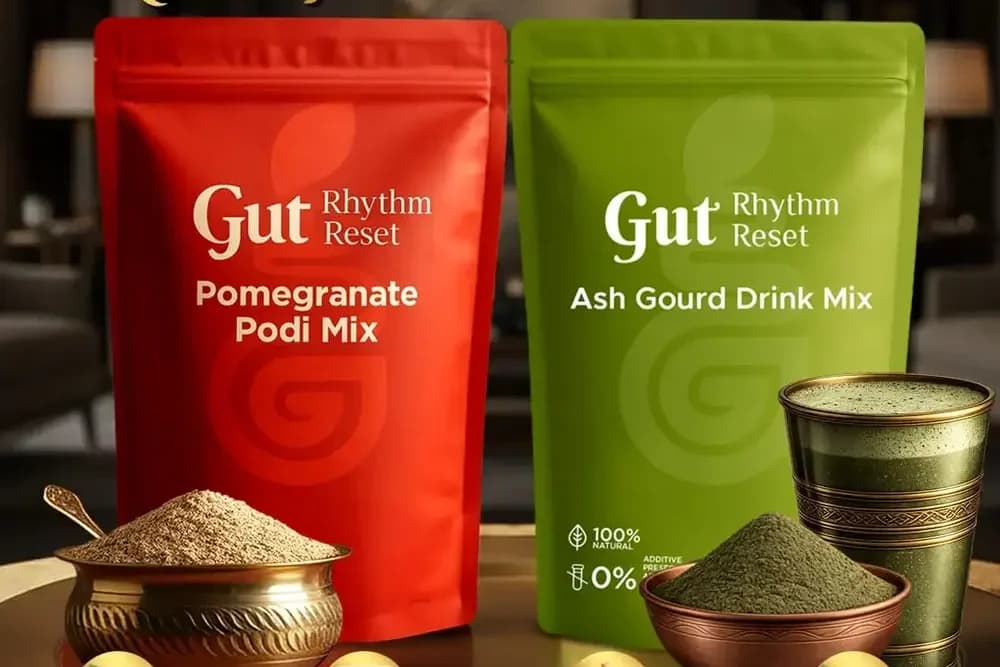
In this combination
Each pouch also has its own page.
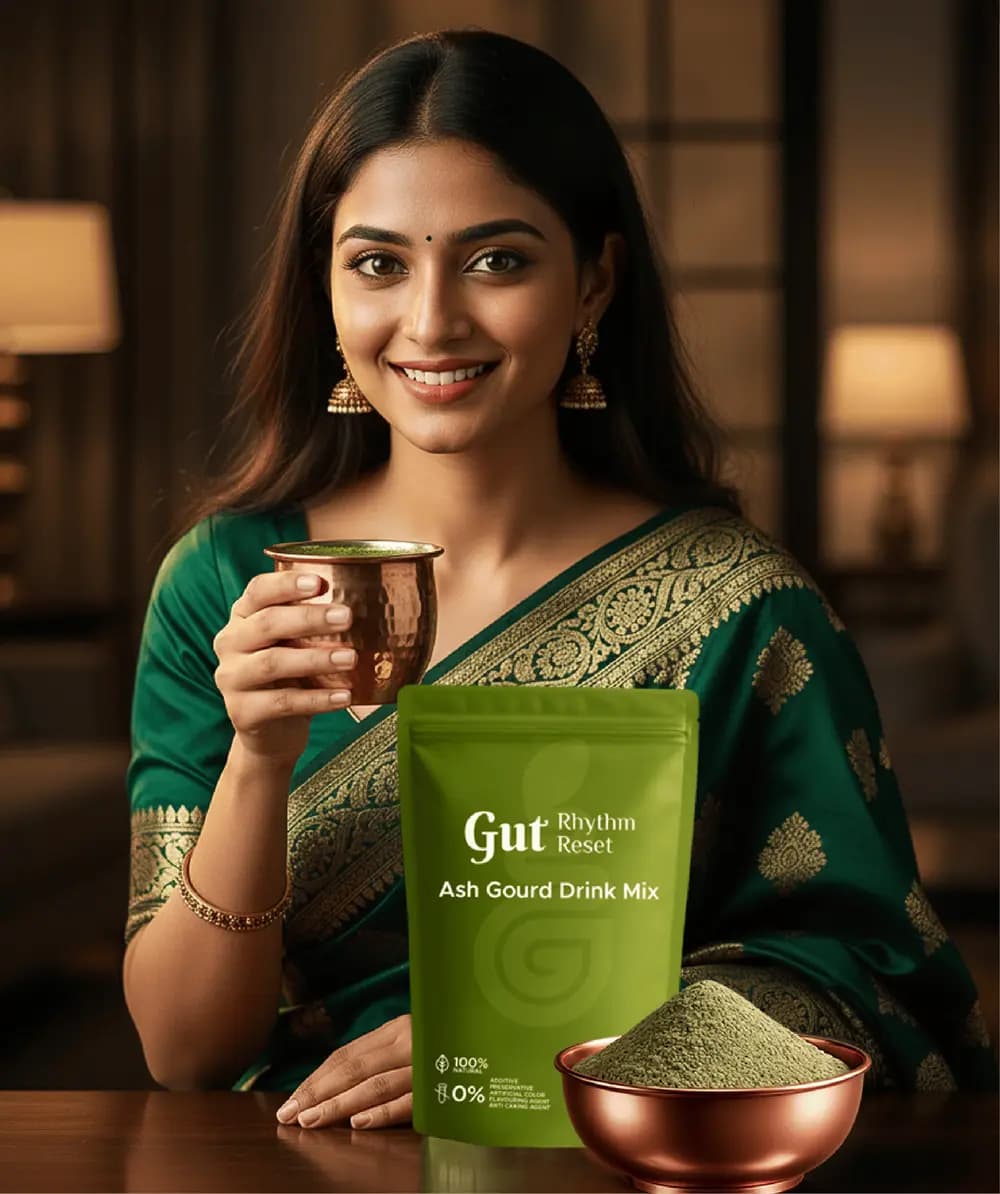
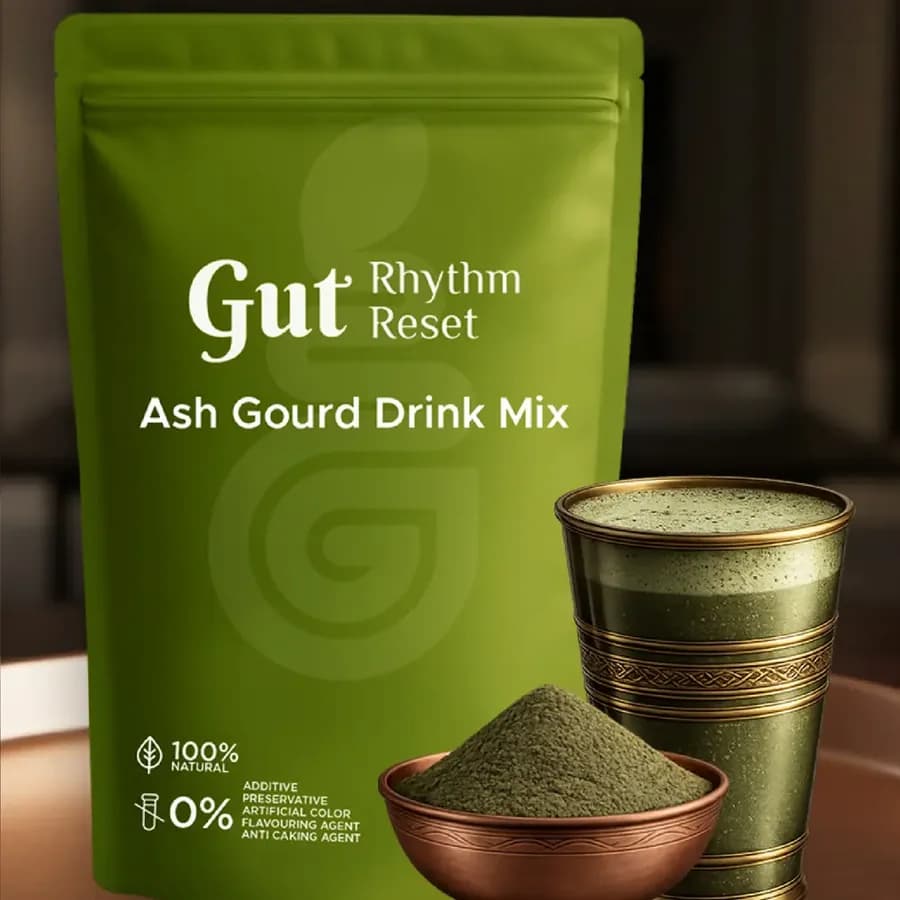 India's Cleanest Ash Gourd Drink Mix500 g · ₹2,499 separately
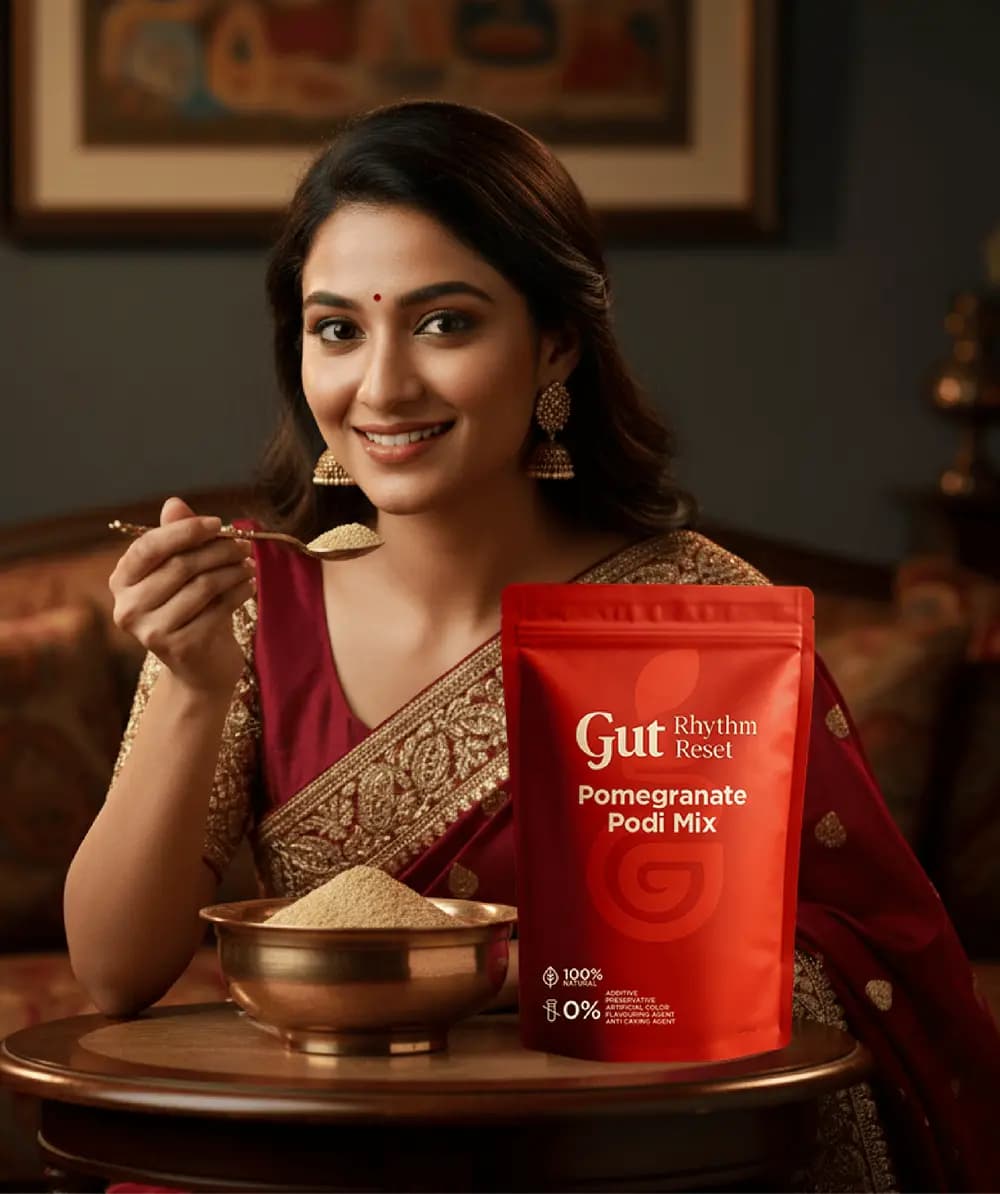
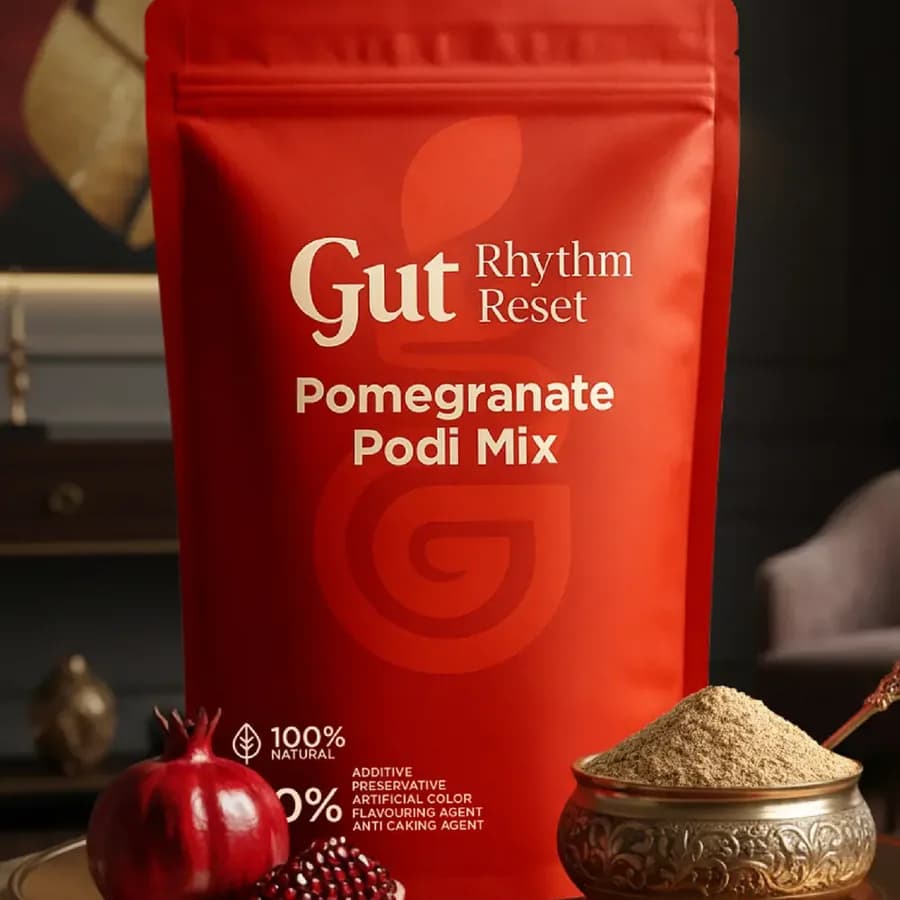 India's Cleanest Pomegranate Podi500 g · ₹2,499 separately
You save ₹999 against buying the two pouches separately.
₹3,999₹4,998Save ₹999 · 20%
Inclusive of all taxes. Free delivery.
Our two cleanest blends together: a refreshing Ash Gourd drink mix and a tangy Pomegranate podi. Eleven whole ingredients between them, nothing else. 120+ servings.
- 120+ servings
- 1 kg
- 100% vegetarian
- No additives or preservatives
1
Prepared fresh and dispatched within 2 working days.
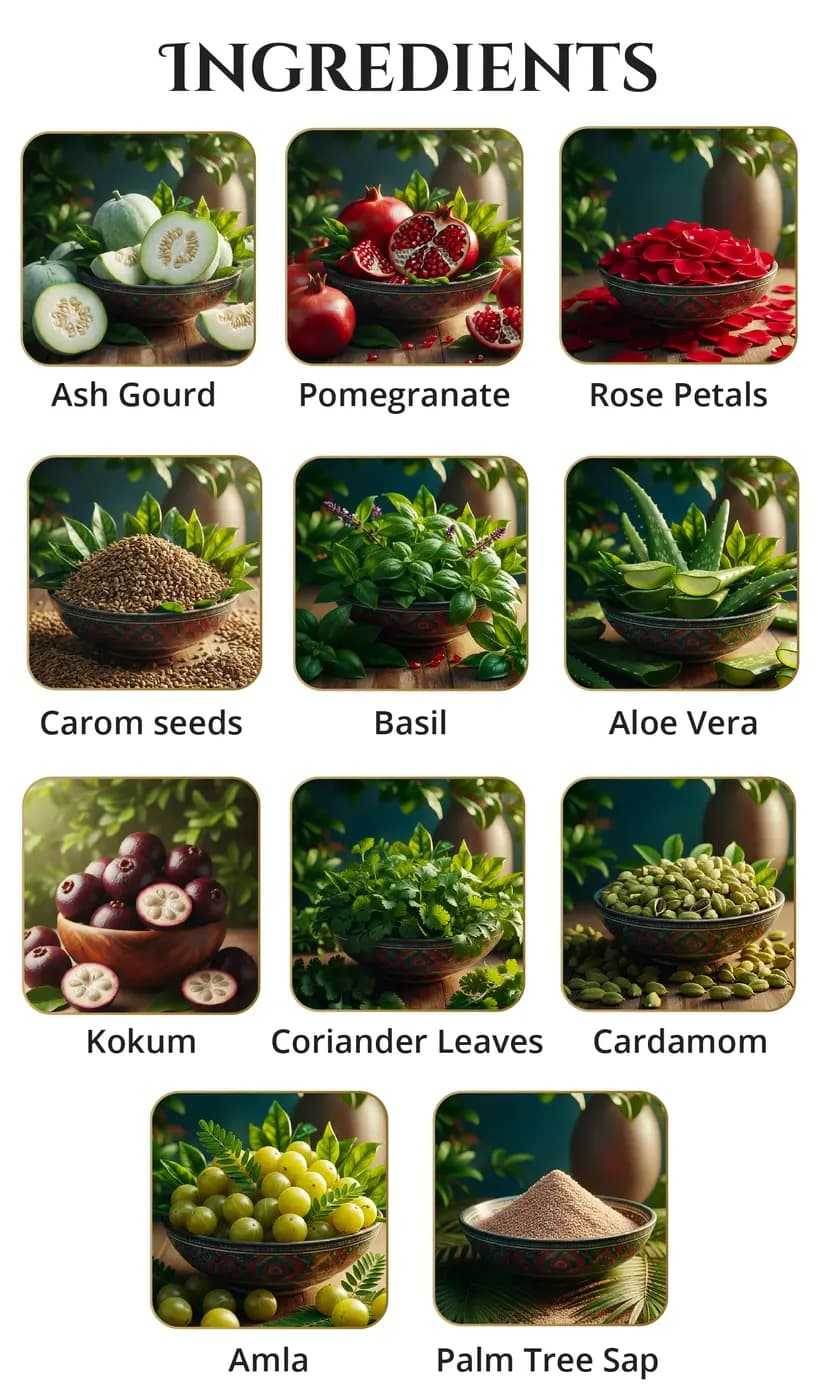
Made with · 11 ingredients
- Ash gourd
- Coriander leaves
- Cardamom
- Carom seeds (ajwain)
- Basil
- Aloe vera
- Palm tree sap
- Pomegranate
- Rose petals
- Kokum
- Amla
In this combination
Each pouch also has its own page.
- India's Cleanest Ash Gourd Drink Mix500 g · ₹2,499 separately
- India's Cleanest Pomegranate Podi500 g · ₹2,499 separately
You save ₹999 against buying the two pouches separately.
A part of your day
Two simple habits, every day
- 1Drink mix, before meals
Stir 1 tbsp Ash Gourd Drink Mix into a glass of water. Mornings on an empty stomach are popular.
- 2Podi, after meals
Chew 1 tbsp Pomegranate Podi directly after breakfast, lunch and dinner.
Clean, by design
India's cleanest means a short ingredient list we are proud to print, and proof you can ask for.
Whole ingredients only
Real fruits, seeds and spices. No extracts, fillers or flavourings.
Nothing added
No preservatives, artificial colours or flavours, or anti-caking agents.
Independently lab tested
Tested by an independent laboratory. Reports are available on request.
FSSAI-licensed kitchen
Made fresh in small batches in a licensed kitchen.
Known suppliers
We know where every ingredient comes from.
What's inside, and what research says
A short, honest look at each ingredient. These are findings about the ingredients themselves, from published research. They are not claims about this product.
Ash gourdBenincasa hispidaA large, mild, watery gourd eaten in India as a vegetable in curries and sun-dried bori, and cooked in sugar syrup to make the sweet called petha.
What it contains
- Raw ash gourd (waxgourd) is mostly water: about 96 g per 100 g, with about 13 kcal, 2.9 g fibre and 13 mg vitamin C per 100 g (USDA SR Legacy data).
- A review reports the edible portion as roughly 94-97% moisture, with small amounts of fibre, vitamin C (a wide range, about 1-68 mg per 100 g), B vitamins and minerals such as potassium.
What research says
- Laboratory studyIn laboratory tests, extracts of ash gourd fruit, peel and seed neutralised free radicals. The review notes most antioxidant evidence is from test-tube work, which may not carry over to people.
- Laboratory studyA laboratory analysis of fresh ash gourd juice found phenolic compounds (gallic acid the most abundant) plus oleanolic and ursolic acids, and measurable radical-scavenging and iron-binding activity.
Source: Molecules 2020
Research on this ingredient is still early: laboratory and animal studies only.
Coriander leavesCoriandrum sativumFresh coriander leaves (hara dhania) are a green herb chopped into chutneys, raita, dals and curries or scattered over finished dishes in Indian cooking.
What it contains
- Coriander leaves are a source of carotenoids: one HPLC study reported about 74 ug/g lutein and 55 ug/g beta-carotene; another reported 74.7 ug/g beta-carotene in south Indian samples.
Source: Food and Nutrition Bulletin 2008; Natural Product Research 2020
- Coriander leaves contain phenolic compounds (11 characterised, mainly caffeic acid derivatives and feruloylquinic acids), plus tocopherols, chlorophylls, ascorbic acid and flavonols.
Source: Food Chemistry 2013; Plant Foods for Human Nutrition 2011
What research says
- Laboratory studyLaboratory tests on coriander leaves and stems measured radical-scavenging and other antioxidant assays; soil-grown plants had the highest antioxidant activity, mainly linked to water-soluble compounds such as phenolics. Test-tube data only.
- Laboratory studyIn a laboratory processing study, brief steam-blanching left coriander leaf phenolic content and antioxidant capacity virtually unchanged, and short water-blanching gave higher values than the unheated leaves.
Source: Food Chemistry 2013
Research on this ingredient is still early: laboratory and animal studies only.
CardamomElettaria cardamomumCardamom (green elaichi) is the dried seed pod of a ginger-family plant, used whole or ground to flavour chai, sweets, rice dishes and spice blends in Indian food.
What it contains
- GC-MS analysis of four Indian cardamom varieties found essential oil rich in 1,8-cineole (about 29-35%); alpha-terpinyl acetate was 26.7% in the one variety where it was reported.
Source: Natural Product Research 2020
- A 2020 critical review lists carbohydrates, proteins, minerals, lipids, essential oils, flavonoids, terpenoids and carotenoids among the constituents of cardamom capsules.
What research says
- Laboratory studyA laboratory study of cardamom seed oil found antioxidant activity (up to about 79% DPPH inhibition for one extraction condition); extraction method changed oil yield. Test-tube data only.
Source: Molecules 2023
- Laboratory studyA critical review reports antioxidant activity of cardamom capsule extracts and essential oil in laboratory work, and says more research is needed on how its compounds act.
Research on this ingredient is still early: laboratory and animal studies only.
Carom seeds (ajwain)Trachyspermum ammiCarom seeds (ajwain) are small, sharply aromatic seeds tempered in oil or added to doughs, parathas, snacks and lentil dishes in Indian cooking.
What it contains
- Carom seeds yielded 3.2-5% essential oil in 14 Iranian samples; thymol was the main compound (about 60-96% of the oil), with p-cymene, gamma-terpinene and carvacrol also present.
Source: Scientific Reports 2022
- Oil composition varies by origin: another sample was mostly gamma-terpinene (48%), p-cymene (34%) and thymol (17%). Ajowan plant material also contained phenolic acids (e.g. caffeic, ferulic) and rutin.
Source: Journal of Evidence-Based Complementary & Alternative Medicine 2015; Foods 2022
What research says
- Laboratory studyLaboratory assays (DPPH, FRAP, total antioxidant capacity) measured antioxidant activity of carom seed extracts and oils from 14 Iranian populations; activity differed between populations. Test-tube study only.
Source: Scientific Reports 2022
- Laboratory studyIn a laboratory study, thymol content of ajowan oil ranged from about 38% to 89% depending on water stress during growth, so composition is not constant.
Source: Foods 2022
Research on this ingredient is still early: laboratory and animal studies only.
Basil (tulsi)Ocimum tenuiflorum (tulsi) and Ocimum basilicum (sweet basil)Tulsi (holy basil) leaves are a common aromatic herb in Indian homes, used fresh or dried in teas and food, while sweet basil is the culinary basil used in sauces, salads and pesto-style dishes.
What it contains
- Tulsi (O. tenuiflorum) leaves are reported to contain phenolic compounds including rosmarinic, chlorogenic, caffeic, ferulic and vanillic acids, plus volatile oil constituents such as eugenol.
- Sweet basil (O. basilicum) volatile constituents mostly consist of linalool, eucalyptol, estragole and eugenol.
Source: Plants 2023
What research says
- Laboratory studyTulsi (O. tenuiflorum): in laboratory assays summarised in a review, leaf extracts scavenged DPPH and other free radicals, and the strength of activity depended on the solvent used for extraction.
- Laboratory studySweet basil (O. basilicum): a laboratory study of fresh, frozen and freeze-dried leaves found phenolic content and antioxidant activity of extracts were positively correlated and depended on the extraction solvent.
Research on this ingredient is still early: laboratory and animal studies only.
Aloe veraAloe vera (Aloe barbadensis Miller)A succulent whose clear inner-leaf gel is eaten or drunk in India as juice, in drinks and in some sweets, after the bitter yellow latex under the rind is removed.
What it contains
- Aloe vera gel contains two main polysaccharides: an acetylated, mannose-rich one (acemannan) and a galacturonic-acid-rich cell-wall one. Amounts vary with climate, soil and processing.
What research says
- Human trialIn a small 14-day study with no comparison group, 53 healthy adults drank 250 mL of aloe gel extract daily and plasma total antioxidant capacity rose. More research is needed.
Source: Journal of Complementary and Integrative Medicine 2015
- Laboratory studyIn a laboratory digestion and colon-fermentation model, aloe gel fibre fermented like a known prebiotic and antioxidant activity rose after simulated digestion. Human data were not part of this study.
Source: Molecules 2019
Palm tree sap (palm jaggery)Borassus flabellifer (palmyra palm); also date palm (Phoenix sylvestris) and coconut palm (Cocos nucifera)Palm jaggery is made by boiling down the sap of palmyra, date or coconut palms into a dark sweetener, used in several Indian states for sweets and traditional dishes.
What it contains
- A 2026 review of palmyra, date and coconut palm jaggery reports iron up to 11.4 mg, zinc up to 2.5 mg and potassium up to 1,050 mg per 100 g; these are upper figures and values vary.
- A review of palm sap sugar describes it as made of sucrose, glucose and fructose, with mineral content and taste varying by palm species, region, climate and processing method.
Source: Heliyon 2023
What research says
- Laboratory studyA laboratory study of palmyra palm syrup (not solid jaggery) measured radical-scavenging antioxidant activity, higher in thermally processed syrup. Chemical assays only; no human data.
Source: Biology 2021
Research on this ingredient is still early: laboratory and animal studies only.
PomegranatePunica granatumA fruit whose ruby seed-sacs (arils) are eaten fresh, pressed into juice, or used dried (anardana) as a souring spice in Indian cooking.
What it contains
- Raw pomegranate arils provide about 10.2 mg vitamin C and 4.0 g dietary fibre per 100 g (USDA data, California Wonderful variety).
- Pomegranate is a source of polyphenols, especially the ellagitannin punicalagin; a review lists it at about 10-50 mg per g in the peel (the inedible part), the highest of the phenolics listed.
Source: Antioxidants (Basel) 2021; Critical Reviews in Food Science and Nutrition 2021
What research says
- Laboratory studyA review summarising laboratory work reports that pomegranate polyphenols show strong antioxidant capacity in test-tube assays, with punicalagin described as the main antioxidant, especially in the peel.
- Human reviewPunicalagin is broken down to ellagic acid, which gut bacteria can convert to urolithins. The review says punicalagin's absorption and fate in the gut are still unclear.
Source: Antioxidants (Basel) 2021
- Human trialIn a trial of 100 healthy adults, only about 40% converted compounds from pomegranate juice into urolithin A; those who did had a different gut microbiome profile.
Rose petalsRosa damascena / Rosa centifoliaEdible fragrant petals, eaten dried or fresh and preserved with sugar as gulkand, and used to flavour sweets, drinks and desserts in India.
What it contains
- A laboratory study of Rosa damascena petals measured a high total phenolic content (about 482 micrograms gallic-acid equivalents per mg of extract), and a review lists flavonoids such as quercetin and kaempferol and anthocyanins among the petal constituents.
Source: Acta Scientiarum Polonorum Hortorum Cultus 2017; Iranian Journal of Basic Medical Sciences 2011
What research says
- Laboratory studyLaboratory studies found rose petal extracts have antioxidant activity in test-tube assays. The 2011 review reported no human studies of this antioxidant activity.
Source: Iranian Journal of Basic Medical Sciences 2011; Acta Scientiarum Polonorum Hortorum Cultus 2017
Research on this ingredient is still early: laboratory and animal studies only.
KokumGarcinia indicaA tart, deep-purple fruit whose dried rind is used in Konkan, Goan and Gujarati cooking to sour curries and to make the cooling drink kokum sherbet.
What it contains
- Kokum rind is a source of hydroxycitric acid, garcinol (a yellow benzophenone pigment) and two anthocyanins, cyanidin-3-sambubioside and cyanidin-3-glucoside, per a 2021 review.
Source: Pharmaceuticals (Basel) 2021
What research says
- Laboratory studyIn a laboratory study, garcinol purified from kokum rind scavenged free radicals in the DPPH assay at about three times the strength of vitamin E by weight.
- Animal studyIn rodent studies summarised in a 2021 review, kokum extracts raised antioxidant enzyme levels such as glutathione, SOD and catalase. The review lists no human studies.
Source: Pharmaceuticals (Basel) 2021
Research on this ingredient is still early: laboratory and animal studies only.
AmlaPhyllanthus emblicaA sour, astringent green fruit (Indian gooseberry) eaten fresh, pickled, as candy or murabba, and dried in powders and chutneys across India.
What it contains
- A review reports fresh amla vitamin C of about 193-720 mg per 100 g depending on variety and study, among the highest reported for fruits, with wide variation between cultivars.
Source: Antioxidants (Basel) 2022
- Amla is a source of polyphenols, including ellagitannins (such as emblicanin A and B, corilagin, chebulagic acid), gallic and ellagic acids, and flavonoids such as quercetin and rutin.
Source: Antioxidants (Basel) 2022
What research says
- Laboratory studyLaboratory studies found amla extracts scavenge free radicals in chemical assays, and in cultured liver cells raised antioxidant enzyme levels (glutathione, SOD, catalase) at 50-100 micrograms per mL.
Source: Antioxidants (Basel) 2022
- Human trialA very small crossover trial (15 healthy adults, 500 mg per day of amla for 18 weeks) reported lower oxidative-stress markers, including 8-OHdG, than placebo. More research is needed.
General information about the ingredients, not about this product. Our products are food, not medicine, and are not intended to diagnose, treat, cure or prevent any disease. These statements have not been evaluated by FSSAI.
Common questions
What does “India's Cleanest” mean?
It means the shortest honest ingredient list we can make: whole ingredients only, with no additives, preservatives, artificial colours or flavours, and every product independently lab tested. The full list is printed on the pack and on each product page, with the reference for what is known about every ingredient.
Are your products lab tested?
Yes. Our products are tested by an independent laboratory, and the lab report is available on request. Write to us with the product name and we will send it.
Are they FSSAI approved?
Our blends are made from whole food ingredients in an FSSAI-licensed kitchen. They suit most adults as part of a normal diet. If you are pregnant, nursing, have a medical condition or take regular medication, please check with your doctor first.
How do I use them?
Podis are chewed by the spoonful, usually after meals. Drink mixes are stirred into a glass of water. The Kalonji Mix is sprinkled on food or stirred into buttermilk, and the Flax Seed Podi is simmered into a warm, kheer-like dessert. Each product page has the steps.
About this blend
This combo pairs India's Cleanest Ash Gourd Drink Mix with India's Cleanest Pomegranate Podi. Between them: ash gourd, pomegranate, kokum, amla, rose petals, aloe vera, basil, cardamom, coriander leaves, carom seeds and palm tree sap. That is the whole list.
Both are made fresh in small batches in an FSSAI-licensed kitchen and independently lab tested. No additives, no preservatives, no artificial colours or flavours.
Buying the combo is ₹999 less than buying the two pouches separately.
Delivery, returns and safety
Orders are prepared fresh and dispatched within 2 working days, then delivered across India in 4–7 business days. You'll get tracking by email.
Because the products are consumable, we can't take returns, but if your order arrives damaged, defective or incorrect, tell us within 7 days and we'll replace it. Full policy
These statements have not been evaluated by FSSAI or any regulator. Our products are food/dietary supplements and are not intended to diagnose, treat, cure or prevent any disease. Consult your doctor if you have a medical condition, are pregnant or nursing, or are taking medication.
Pairs well with
Combo · save ₹999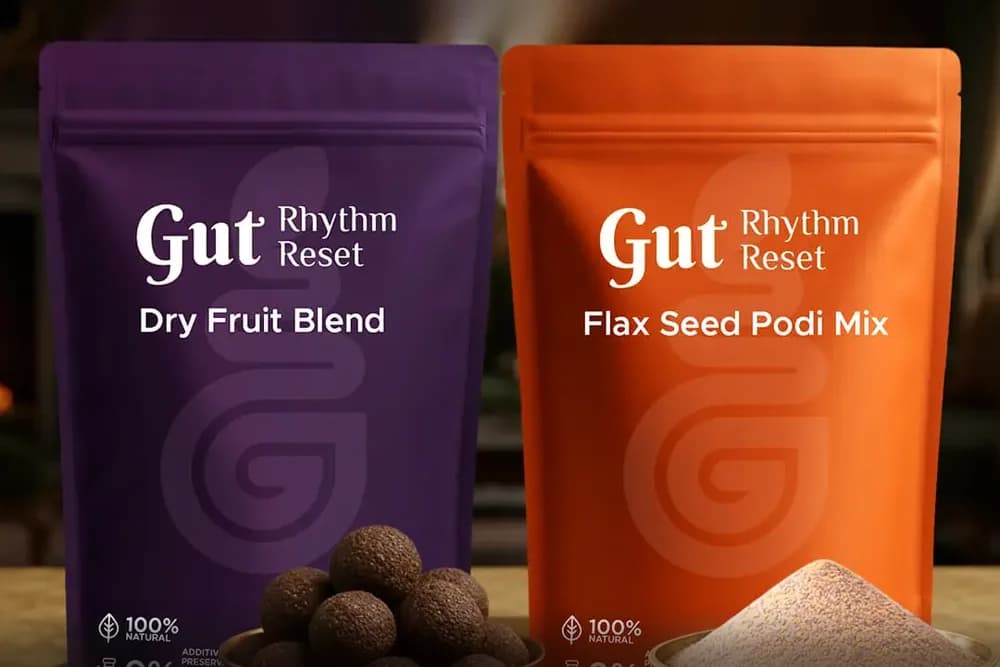 Combo · save ₹999
60-day pack · 1 kg
India's Cleanest Dry Fruit + Flax Seed Combo
- Dry Fruit Blend
- Flax Seed Podi
₹3,999₹4,998
